|
|||||||


| Bream Anglers Tavern Drop in here if you're just surfing with a beer in your hand. Good place to just hang out... |

 |
|
|
Thread Tools | Rate Thread | Display Modes |
|
|||||||
| Bream Anglers Tavern Drop in here if you're just surfing with a beer in your hand. Good place to just hang out... |
|
|
|
Thread Tools | Rate Thread | Display Modes |
|
#1
 11-03-2003, 07:31 AM
|
||||
|
||||
 Brighter photos - a tip
Hi all,
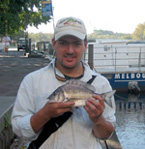
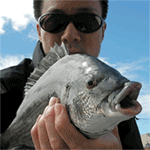
I've had a number of guys send in photos that they would like to lighten. The biggest problem with them is that they have a very bright background while their front is being shadowed. the net effect here is that the camera tries to compensate for the bright background by making the whole photo darker. This makes it VERY hard to lighten later on. When you take a photo, the sun phould be behind the camera so that as much light as possible is on the fish and yourself. We can easily darken the image after. HTH.
__________________
"How people treat you is their karma; how you react is yours." https://www.facebook.com/groups/BreamOnFly/ ---------------------------------------------- 

|
|
#3
11-03-2003, 09:57 AM
|
||||
|
||||
|
Bear,
Another trick is to use your flash if you have to take the pic faceing into the sun. Not as good as having the sun behind the photographer but it does help to lighten up the the person holding the fish even in bright sunshine. It helps to get rid of the shadow cast by the person holding the fish. As you say a lighter photo is better than a darker one. Brian
|
|
#5
11-03-2003, 04:48 PM
|
||||
|
||||
|
Or use an exposure compensation when taking the picture if it is backlit. Some cameras will have a 1 and/or 2 stop exposure compensation button/switch that can be used to ensure a bright background doesn't result in an underexposed foreground.
Another way to achieve a correct exposure is to turn around and meter off the front-lit scene, then hold the shutter button part way down to lock in that exposure reading, then turn back and take the picture. Different cameras will have different methods of achieving compensation for backlit scenes, etc. What is happening is that the camera tries to set an exposure level that averages the scene to 18% grey. Atypical scenes with much more dark or light areas than average will mean the exposure is skewed one way or another. To get a good reading for people faces meter off your hand with the light coming from the same direction as it will be in the actual photo, then give 2 stops more exposure than the reading suggests. Taking pictures with people looking into the sun makes for excessive contrast with dark eye sockets, and harsh shadows and squinty eyes. As with all things it is best to read the instructions that came with your equipment and gain some understanding of how and why things work. Brian's suggestion of using fill flash is a good one, the flash fills in the harsh shadows and lowers the overall contrast. It is effectively another form of exposure compensation.
__________________
pw-bream - Geelong
|
|
#6
11-03-2003, 08:39 PM
|
||||
|
||||
|
The only problem with using the flash is that the fish will tend to hot spot with light as the light reflects off it.
Guys, these tips are more for those who have point and shoot cameras. There are a lot who don't have all the flash features some of us have. For those who have better equipment, it's a good idea to learn as much as you can about it's features. Many have the ability to focus through multiple points and this works with the light metering points as well. Thanks,
__________________
"How people treat you is their karma; how you react is yours." https://www.facebook.com/groups/BreamOnFly/ ----------------------------------------------
|
|
|
|





 Linear Mode

